
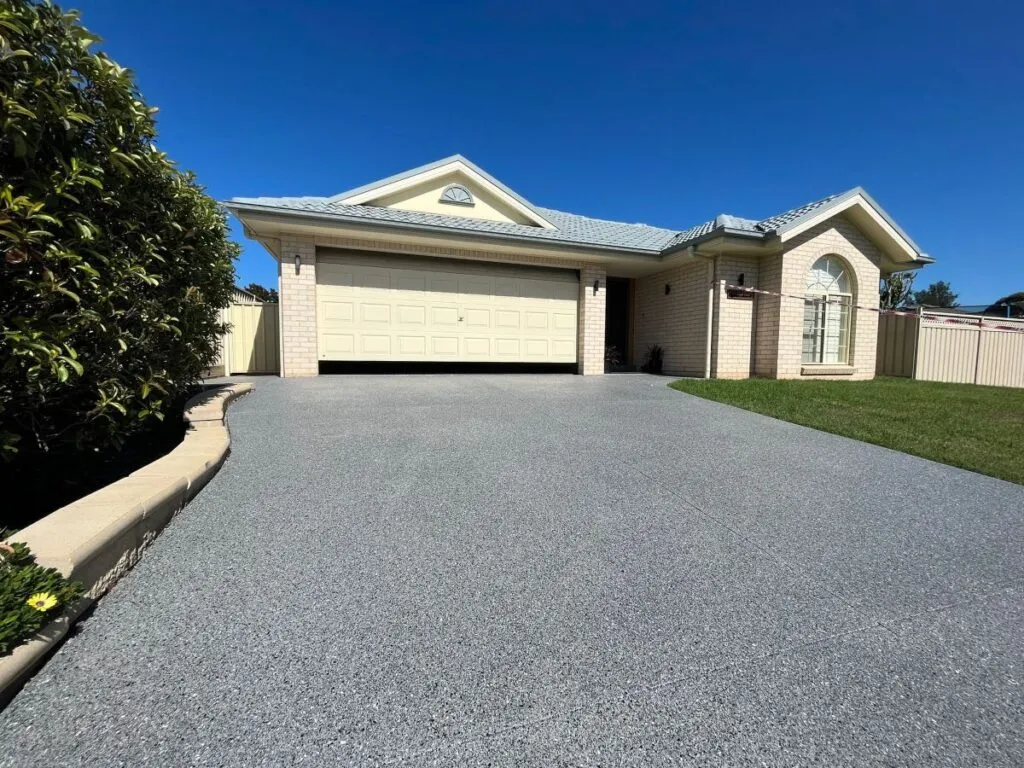
Concrete Driveways
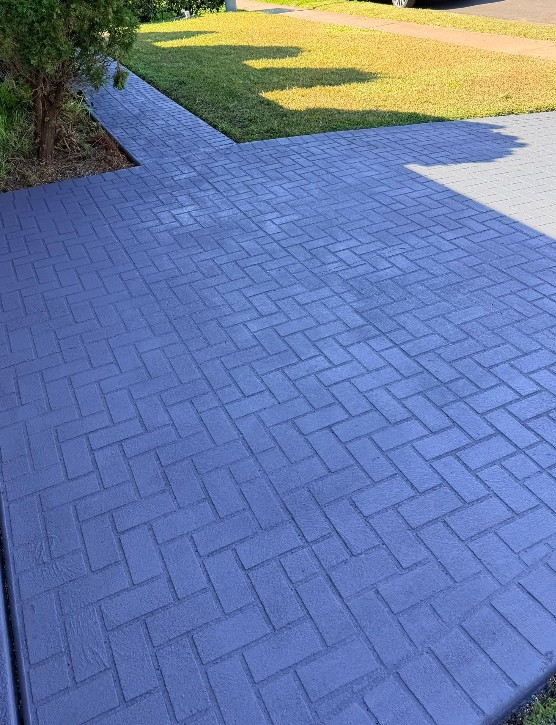
Does A Tired Concrete Driveway Need Replacing ?
Usually not. If the slab underneath is still sound, the problem is almost always in the surface: a weathered top layer, an old sealer that has worn off, stains that have soaked into the concrete, and a dull, tired look. All of that can be fixed without replacing the driveway.
Cleaning, repairing and sealing the surface costs a fraction of a new driveway, with no demolition and no new concrete to wait on. Concrete driveway sealing starts from $1,500, and the figures are further down the page. Every floor type and what each price includes is on the epoxy flooring cost page.
Two coats of concrete sealer, pigmented or clear, depending on the look you want. UV-stable sealer built for full Sydney sun, so it does not chalk or yellow.
What Makes A Concrete Driveway Look Old
Nearly always it is one of these, and usually several at once.
Read more
- Surface staining: oil and transmission drips from cars, rust marks from a trailer or a bin, dark tannin stains under a gum or a jacaranda, and rubber marks where a car turns on the spot.
- A failed sealer: the original sealer breaks down under UV and turns patchy, chalky or yellow, so the driveway looks blotchy even after a wash.
- Flaking and dusting: the very top skin lifts in thin scales, especially where water sits, and the surface goes powdery underfoot.
- Weathered exposed aggregate: the cement paste holding the top of the stone in place erodes and the sealer disappears, so a driveway that used to look wet and rich now looks flat and grey.
- Moss and lichen: the shaded strip down the side of the house that never dries out and never comes clean with a hose.
- Efflorescence: the white bloom that keeps coming back because water is moving through the slab and leaving salts on the surface.
None of that is structural. It is the outer layer of the concrete breaking down after years of sun, rain, car tyres and pressure washing.
What Grinding A Driveway Removes, And What It Cannot
Grinding cuts the weathered, contaminated top layer away with diamond tooling and takes the driveway back to sound concrete that has not been sitting in the weather.
Read more
It takes away the failed sealer, the chalky and flaking skin, paint spills, most surface staining that sits in the top layer, tyre marks, high spots and the lippage where two slabs have settled slightly differently. On an exposed aggregate driveway it brings the stone forward again, so the surface looks sharp instead of washed out.
Not every driveway needs grinding. The standard preparation for sealing is a pressure clean to remove contaminants and an acid etch to open the concrete up, then the cracks and gaps are filled. Grinding is for a surface that has failed, flaked or been coated before. There are limits to what it can fix, and it is better to know them before you commit.
- Structural cracks: a crack that runs right through the slab can be cut out, filled and made much less obvious, but it is still a crack and it can come back if the ground under it is still moving.
- Movement and settlement: if a section has dropped, lifted, or rocks when you drive on it, the problem is underneath the concrete and no surface work fixes it.
- Tree root damage: roots that have lifted a slab will keep lifting it.
- Deep oil contamination: a stain soaking into open concrete for years can go deeper than the material we take off, and it can ghost back through. We tell you before we start if we think a patch is at risk.
- Drainage: grinding follows the existing fall. If water currently runs toward your garage or your house, that stays true afterwards.
- Reinforcement problems: where steel inside the slab has rusted and pushed the concrete apart, that section has failed from the inside and needs replacing.
Nothing goes down until the driveway is clean, sound and dry.
Lighter Driveway Colours Stay Cooler
Lighter driveway colours stay cooler in the sun than darker ones, and NuTech publishes a figure for it.
Read more
Every colour on NuTech’s colour chart carries a total solar reflectance number, and the higher the number, the more of the sun’s heat that colour reflects instead of holding.
- At the light end: Cool White is 90, Dover White 85 and Surfmist 75.
- Mid greys: Shale Grey and Light Grey are 57, Earl Grey 54, Windspray 52 and Sunset 45.
- Dark colours hold the heat: Woodland Grey is 30, Gunmetal and Ironstone 28, and Monument and Midnight 27.
Those figures are published for NuTech’s NXT Cool Zone roof coating in a gloss finish and vary slightly across other finishes, so use them to compare colours rather than as a rating for what goes on your driveway. Shade and the concrete underneath make a difference too.
Where it helps is a close call. If you cannot decide between a mid grey and a charcoal, the lighter one will be cooler underfoot in summer, and on a driveway the kids cross barefoot that matters more than the difference in look.
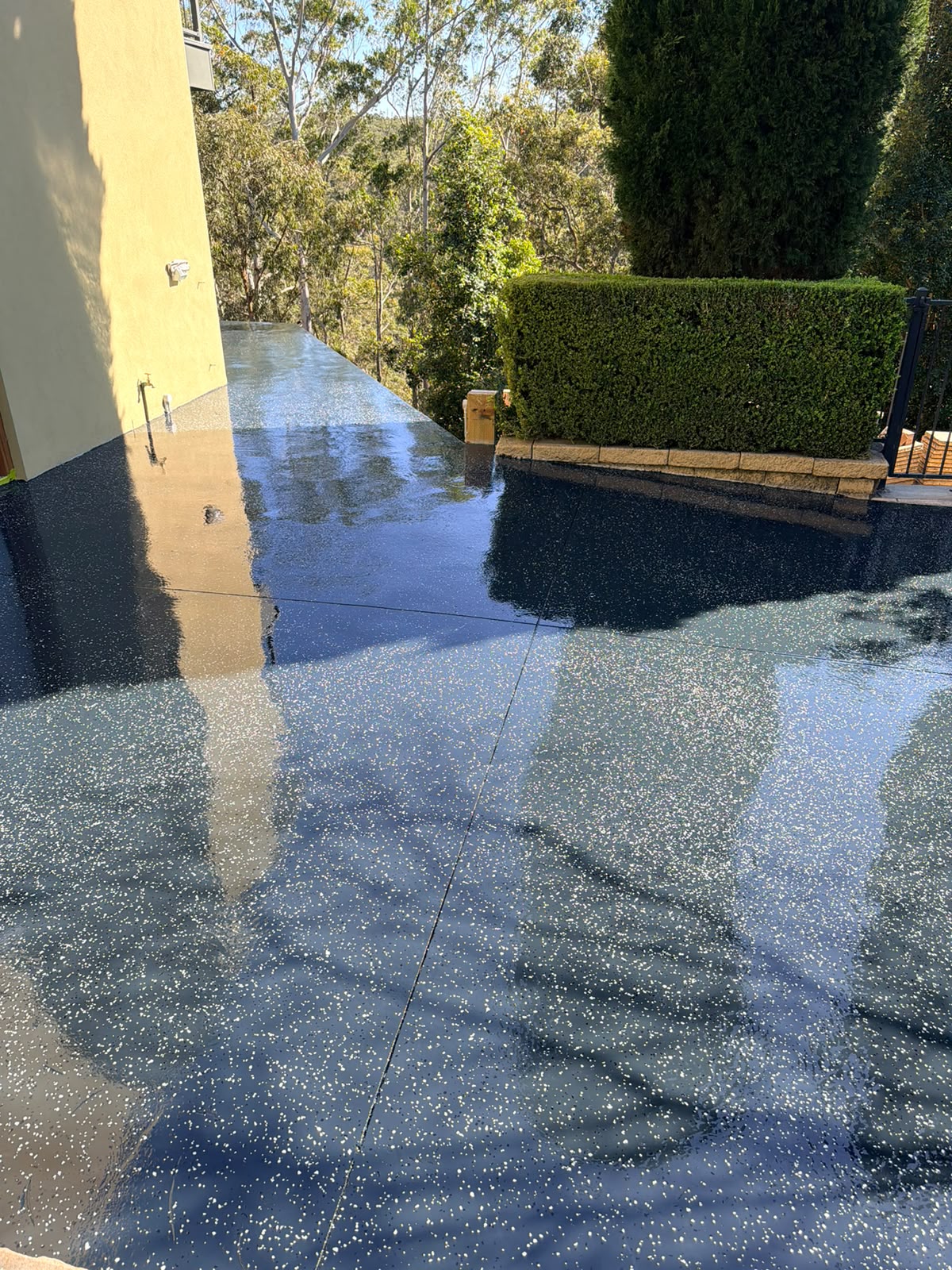 Exposed aggregate
Exposed Aggregate Driveways, And When To Replace Instead
Exposed aggregate driveways are common through Kellyville Ridge, Beaumont Hills, Stanhope Gardens, The Ponds and Box Hill, because most estate builds used it. When the sealer breaks down in the sun the driveway goes grey and dry, even though the stone underneath is still good.
An exposed aggregate driveway is prepared differently from plain concrete. We grind the driveway to expose the aggregate, then go over it again with a finer grade so the stone is polished rather than worn down, and then we reseal it to bring the colour and depth back. Done properly, the driveway looks close to the day it was poured. We do a test patch first, so you see the result before the whole driveway is done.
Rejuvenate when
- The slab is a single sound piece that does not move.
- Cracks are hairline or narrow, with no step between the two sides.
- The damage is a surface layer that has weathered, stained or flaked.
- The fall still sends water where it should go.
Replace when
- Sections rock or have dropped against each other.
- Cracks are wide with the sides at different heights.
- The concrete has broken into pieces.
- Large areas have spalled deep enough to show the steel.
- The sub base has washed out and the slab is bridging a void.
If your driveway is in the second group we will say so, because sealing a failing slab means doing the whole thing again later.
Sealing A Driveway, And What The Sealer Protects
Bare concrete is porous, so it soaks up whatever lands on it. That is why oil stains it, why moss takes hold, why salts bloom out of it, and why the surface breaks down faster than it should. Sealing is what keeps the driveway looking the way it does on the day we finish. There are two broad families of sealer, and epoxy is the third option if you want a pattern or a colour rather than plain sealed concrete.
Concrete driveway sealing starts from $1,500. That covers a pressure clean, an acid etch so the sealer takes, filling the gaps and cracks, and two coats of concrete sealer in a pigmented colour or a clear finish. Most driveways connect to the paving around the house, so that is quoted on top, and the figure is confirmed in writing at the free on-site quote.
Our preferred driveway sealer is NuTech’s PaveCoat, an Australian acrylic sealer listed for driveways, paving and decorative concrete. It is supplied in gloss as standard, with high gloss or matt on request, in clear and 29 standard colours, and it can be custom colour matched. Ask for sample pots if precision matters, because a colour reads lighter outside.
Penetrating Sealer
A penetrating sealer soaks into the concrete and works from inside the pores, repelling water and oil without changing the look much. It suits a driveway where you want the concrete to still read as concrete, and where protection matters more than bringing colour back.
Film Forming Sealer
A film forming sealer sits on the surface as a clear or coloured layer, blocks contaminants at the face, and brings colour and depth back to the concrete. That is the wet look most people are after on exposed aggregate. Which one suits depends on sun, traffic, whether water sits anywhere, and how you want it to look.
Epoxy Driveway
A coloured epoxy coating can be laid through a stencil to give the look of pavers, tiles or stone across a plain slab, or as a flake or solid colour finish. The same finishes go on patios, paths and pool surrounds, and a driveway that was coated years ago can be ground back and recoated rather than replaced.
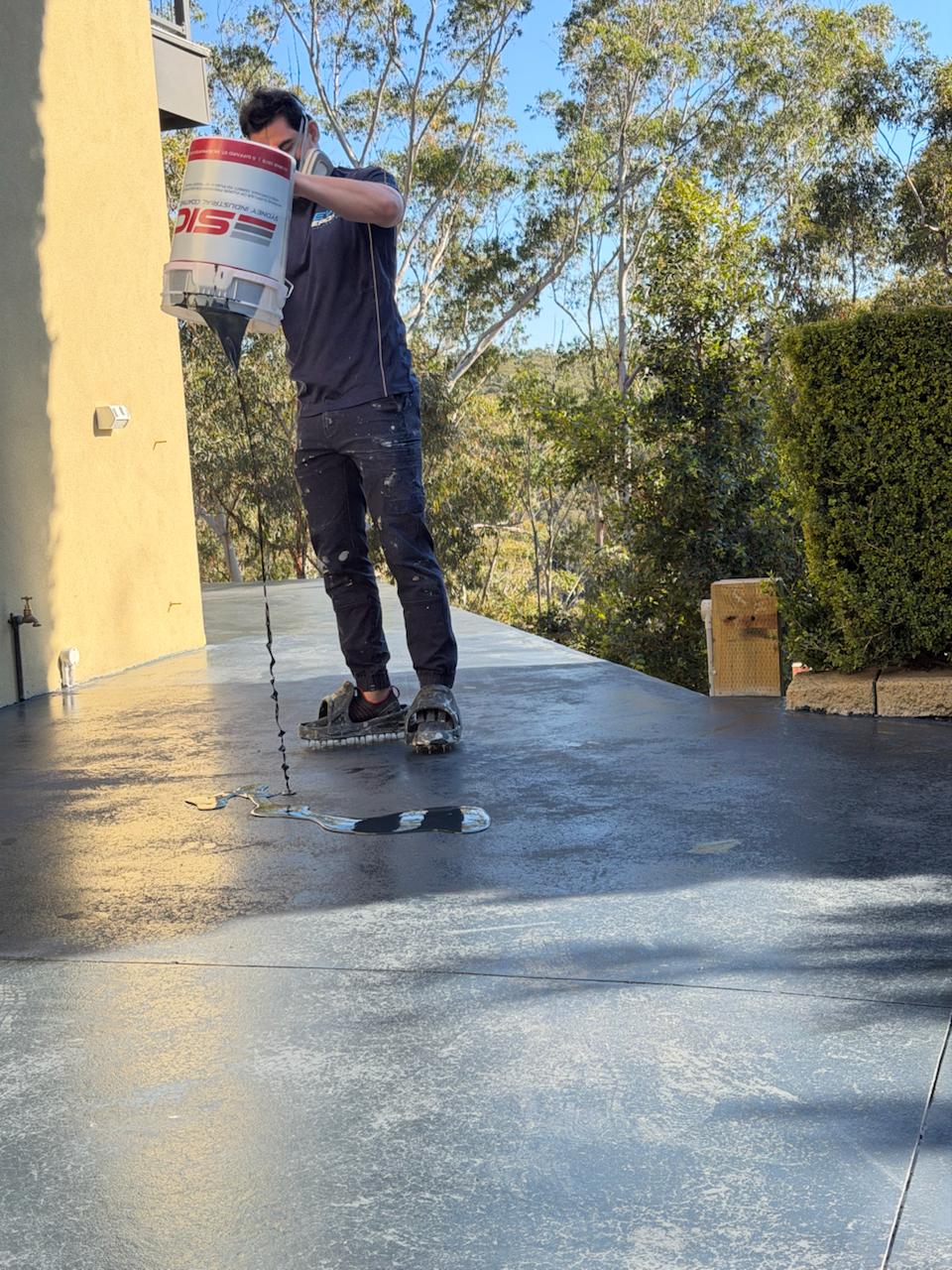
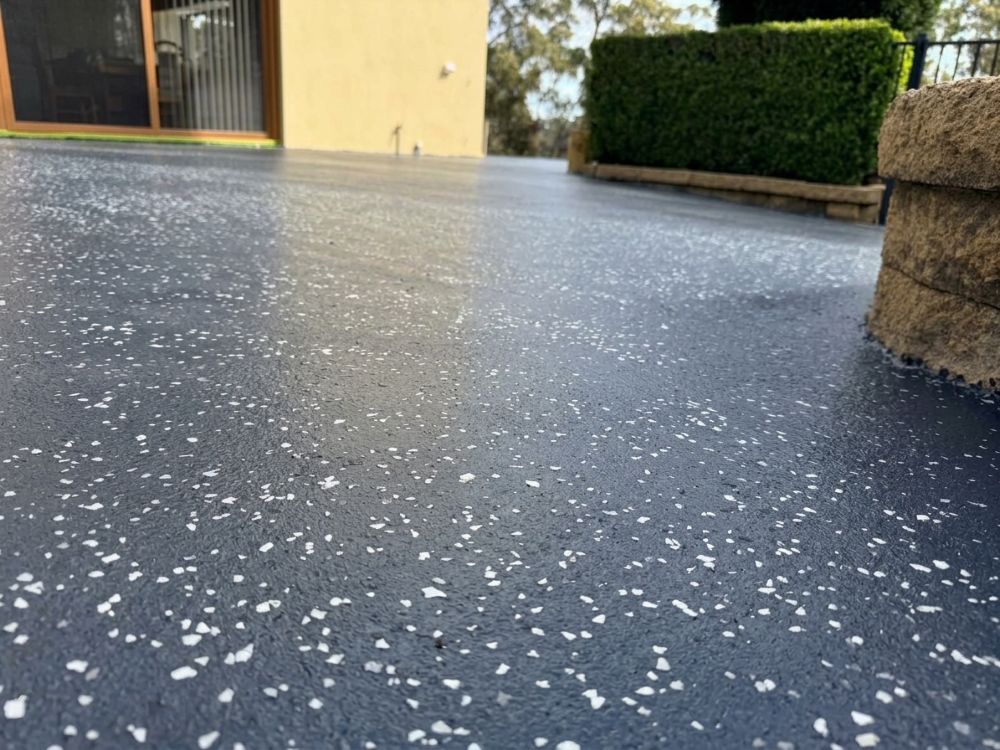
Before And After
Two driveways we have sealed, both pressure cleaned, acid washed and coated. Drag the handle across each one to see the change.
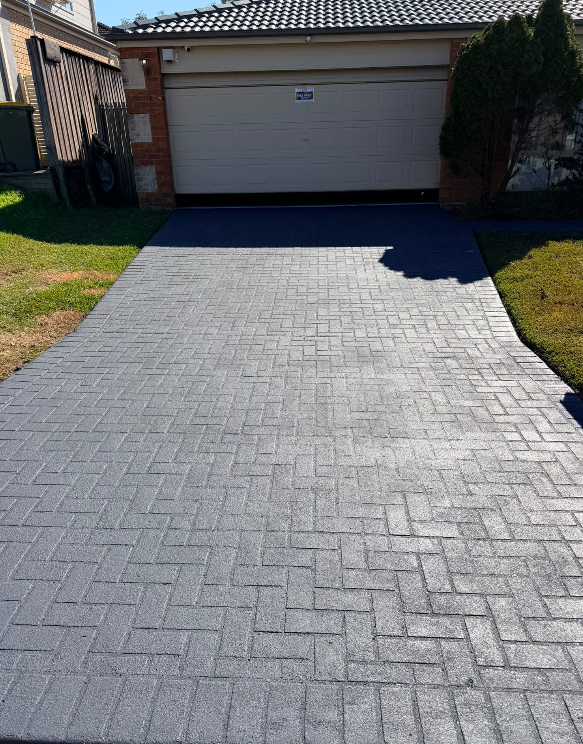
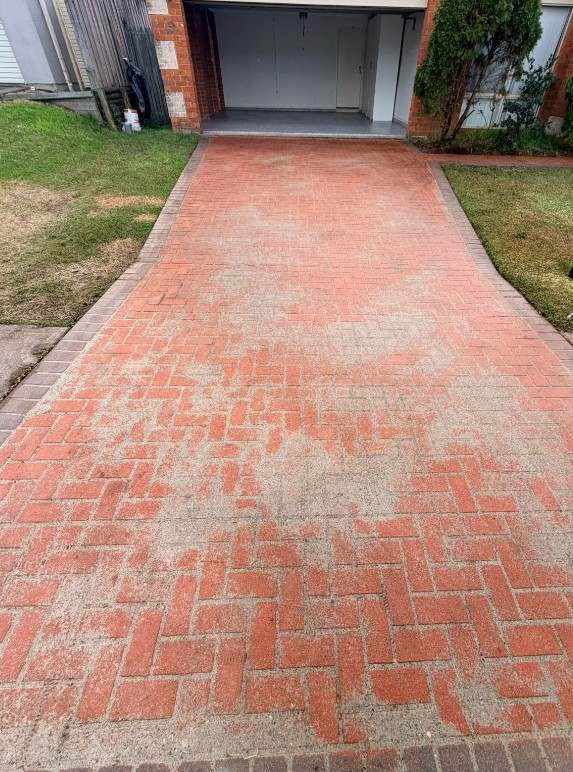
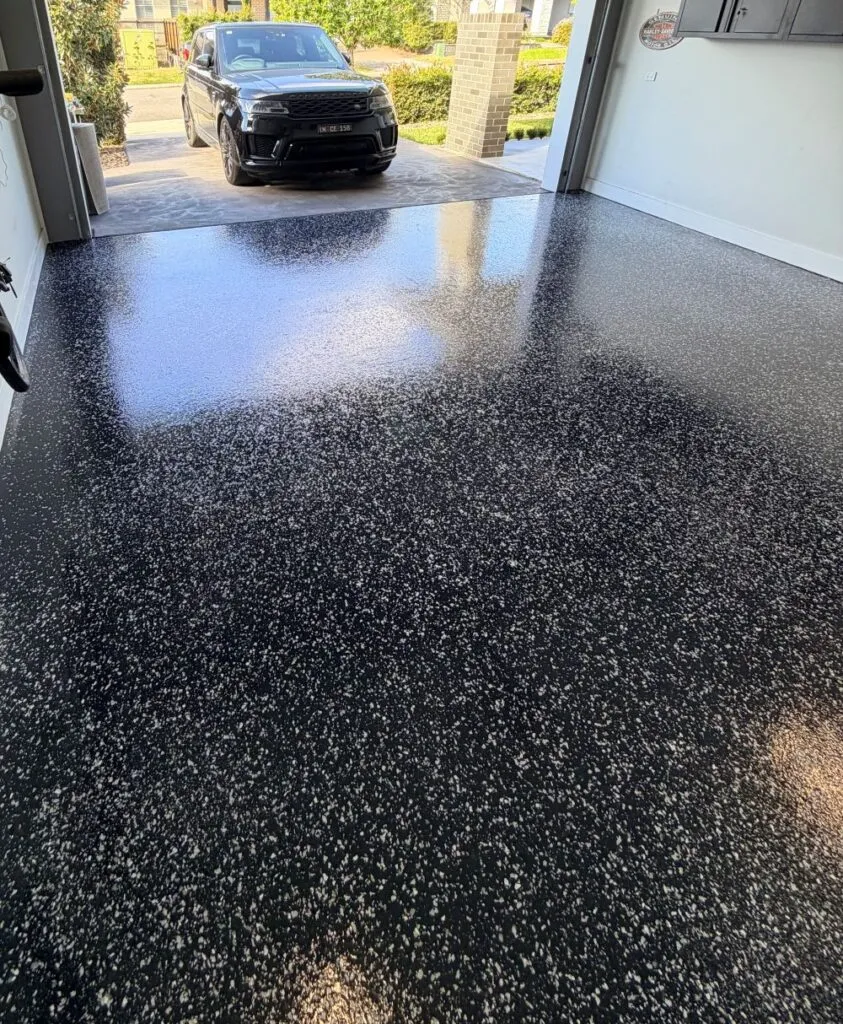
This driveway was pressure cleaned, acid washed, then coated with a non-slip additive worked into the top coat.
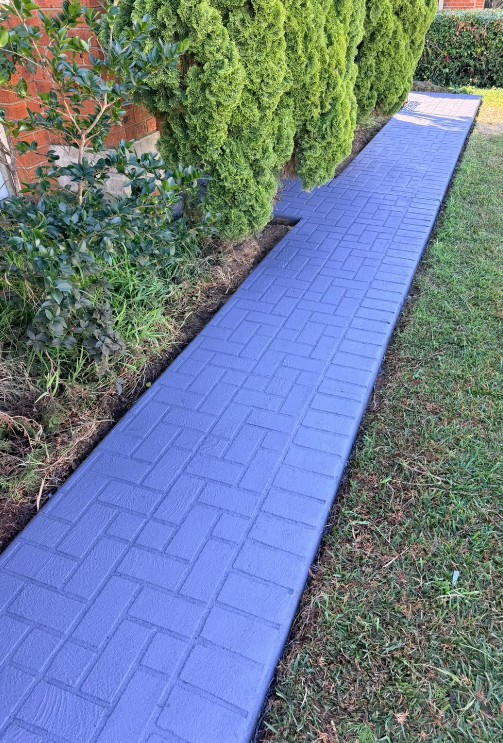
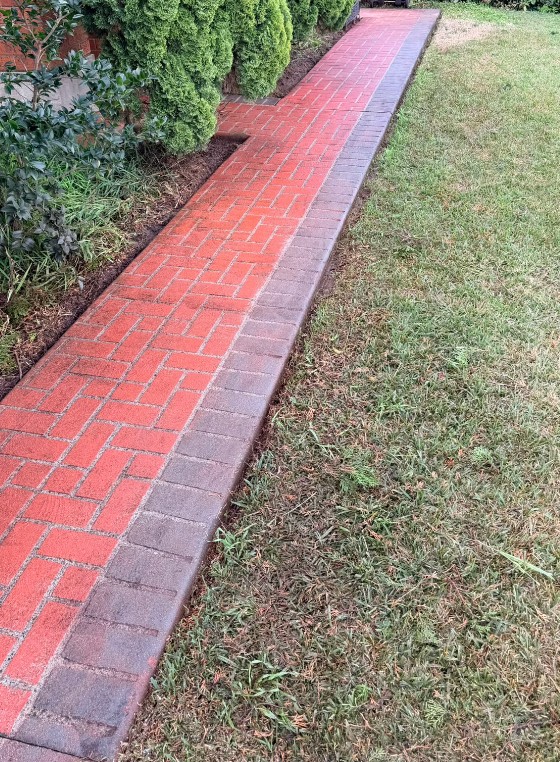
The front path at the same house, sealed on the same visit.
From Booking To Finished Driveway
Get a Free QuoteHow long it takes comes down to the size of the driveway and the state of the surface. Evo Epoxy’s working figure is 72 hours before a sealed driveway goes back into normal use, and you can walk on it well before that. Weather, temperature, the condition of the slab and the product going down all move it, so we confirm the actual dates when the work is booked in.
#1. Quote
We come out, look at the driveway, check what is surface and what is structural, and talk through colour and finish. The quote follows the visit, not photos, and covers the preparation, the product, the colour and the days on site.
#2. Preparation
The driveway is pressure cleaned to strip contaminants and acid etched so the sealer can key in, then the cracks and gaps are filled. A surface that has failed, flaked or been coated before is ground back first.
#3. Sealing And Handover
Two coats of sealer go down, pigmented or clear, with slip resistance worked into the top coat. You can walk on it well before it takes a car, and we give you the dates for your driveway.
Why Customers Choose Evo Over The Rest
What Makes Us Different
Our aim is a floor that still holds up and looks right years after we have finished it.
Real Dates, And We Keep Them
We give you real dates. You will know when we arrive, how long we need, and when you can walk on the floor and park on it.
Commercial Grade Products Only
We do not use retail kits. Our coatings are commercial grade, Australian made epoxy and polyurethane systems, and we can show you the data sheet for whatever goes on your floor.
One Crew From Quote To Warranty
Your quote, your floor and your warranty all sit with one team. The people who quote the floor are the people who lay it, and we do not subcontract.
Rated 5 Stars Across Sydney
Servicing The Hills District & North West Sydney
We work out of Kellyville and cover Castle Hill, Kellyville Ridge, Bella Vista, Norwest, Baulkham Hills, Rouse Hill, Beaumont Hills, Glenhaven, Dural, Kenthurst, Box Hill, Stanhope Gardens, Glenwood, Parklea, The Ponds, Schofields, Winston Hills, Seven Hills, Northmead and Marsden Park.
Frequently Asked Questions
Can You Put Epoxy On A Driveway?
Yes. Evo Epoxy lays epoxy driveways as a stencil finish that gives the look of pavers, tiles or stone, as a flake finish, or as a solid colour. The same finishes go on patios, paths and pool surrounds, and a driveway that was coated years ago can be ground back and recoated rather than replaced.
Epoxy Driveway Or Driveway Sealing, Which Should I Get?
Sealing is the cheaper way in. It goes straight over the driveway with no grinding, and it lasts a couple of years before it needs maintaining. An epoxy driveway costs more because the slab is diamond ground back first, and it does not need recoating on that cycle. If you want a pattern or a real colour change, epoxy is the only one of the two that does it.
How Long Before I Can Park On It Again?
Evo Epoxy’s working figure is 72 hours before a sealed driveway goes back into normal use, and you can walk on it well before that. The sealer needs to reach proper hardness before tyres go on it, particularly where a car turns on the spot. That is a guide rather than a fixed promise, because weather, temperature, the condition of the slab and the product going down all move it. We confirm the actual dates when the work is booked in. Plan to park on the street for that stretch and put the bins out by hand.
Can An Old Exposed Aggregate Driveway Really Look New Again?
Nearly always. The stone is rarely the problem. What has failed is the cement paste holding the top of the stone and the sealer over it, and both of those come back with a grind, a polish and a reseal. We do a test patch first so you see the result on your own driveway before the whole thing is done.
Is My Driveway Better Off Being Replaced?
Sometimes, and we will say so. Rejuvenation suits a slab that is a single sound piece, does not move, and has hairline cracks with no step between the sides. Replacement is the right answer when sections rock or have dropped against each other, cracks are wide with the sides at different heights, large areas have spalled deep enough to show the steel, or the sub base has washed out. Sealing a failing slab means doing it all again later.
Ready To Talk About Driveway Sealing?
Free on-site assessment and a fixed written quote. We will explain what is surface and what is structural before anything is booked.
Get A Free Quote
Tell us roughly how big the driveway is and what shape it is in, and we will come and look at it.
0468 333 881
Call or text
Residential & Commercial
Fully Licensed & Insured
7-Year Product Warranty
Written warranty
sales@evoepoxy.com.au
Email us